
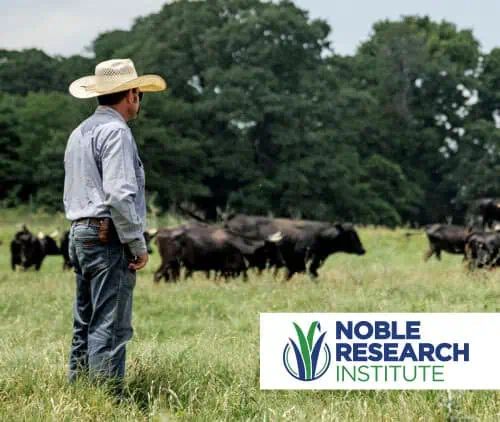
Our partners at American Cattlemen ran a piece this summer that’s worth every TWA member’s time, whether you’re running fullbloods or commercial cows. It centers on Hugh Aljoe, director of ranches, outreach and partnerships at Noble Research Institute, and a concept he’s spent nearly 30 years refining: Reserve Herd Days.
The question behind it is blunt. If your grass quit growing today, how many more days could you run your herd on what’s already standing out there?
Most of us answer that with a gut feeling. Aljoe answers it with a number, and he updates it year-round.
Three figures, that’s it
1 – Days. Count how many days until your spring green-up, then add 30 more. Noble counts backward from May 1 and lands on 180 days needed as of November 1. The extra 30 days lets new spring growth come up through last year’s standing forage so the cattle transition gradually and the rest of the pastures get a full rest.
2 – Demand. A mature cow eats 2.6 to 3 percent of her body weight in dry matter daily. Figure 3 percent to be safe. The catch is honesty about cow size — Aljoe points out that mature cow weight has climbed roughly 7 pounds a year over six decades, with the average now near 1,350 pounds. A lot of us are still doing math on a 1,200-pound cow we don’t actually own anymore.
3 – Supply. Look at a pasture and ask what it would bale today. Then knock that down by a realistic utilization rate — around 25 percent on native growing-season pasture, higher once things go dormant. Divide by your daily demand and you’ve got your reserve herd days for that pasture.
The lesson that’ll cost you the most if you miss it
“Take half, leave half” means half the leaf blade, not half the plant. On a tall native grass, the bottom several inches are leaf sheath, not leaf. Graze to half the plant height and you’ve stripped the solar panels that drive regrowth.
Aljoe also makes a case that ought to get attention: moving cattle daily instead of weekly can add 30 to 40 percent more grazing days in peak season. And Noble’s Coffey Ranch hasn’t fed hay in three years — through drought — while out-producing what the soil surveys say that ground should grow.
Why it matters for Wagyu
Our cattle spend a long time on feed. That makes every dollar on the cow-calf side worth defending, and supplemental feed is usually the biggest direct cost on the place. Grazing days you didn’t have to buy are margin you keep.
Read the full article HERE at americancattlemen.com. Our thanks to American Cattlemen — a TWA Partner — for the work they put into pieces like this one.
DID YOU KNOW? With a Texas Wagyu Association membership, you receive a complimentary annual subscription to American Cattlemen magazine. Join us today and stay informed on industry best practices.