
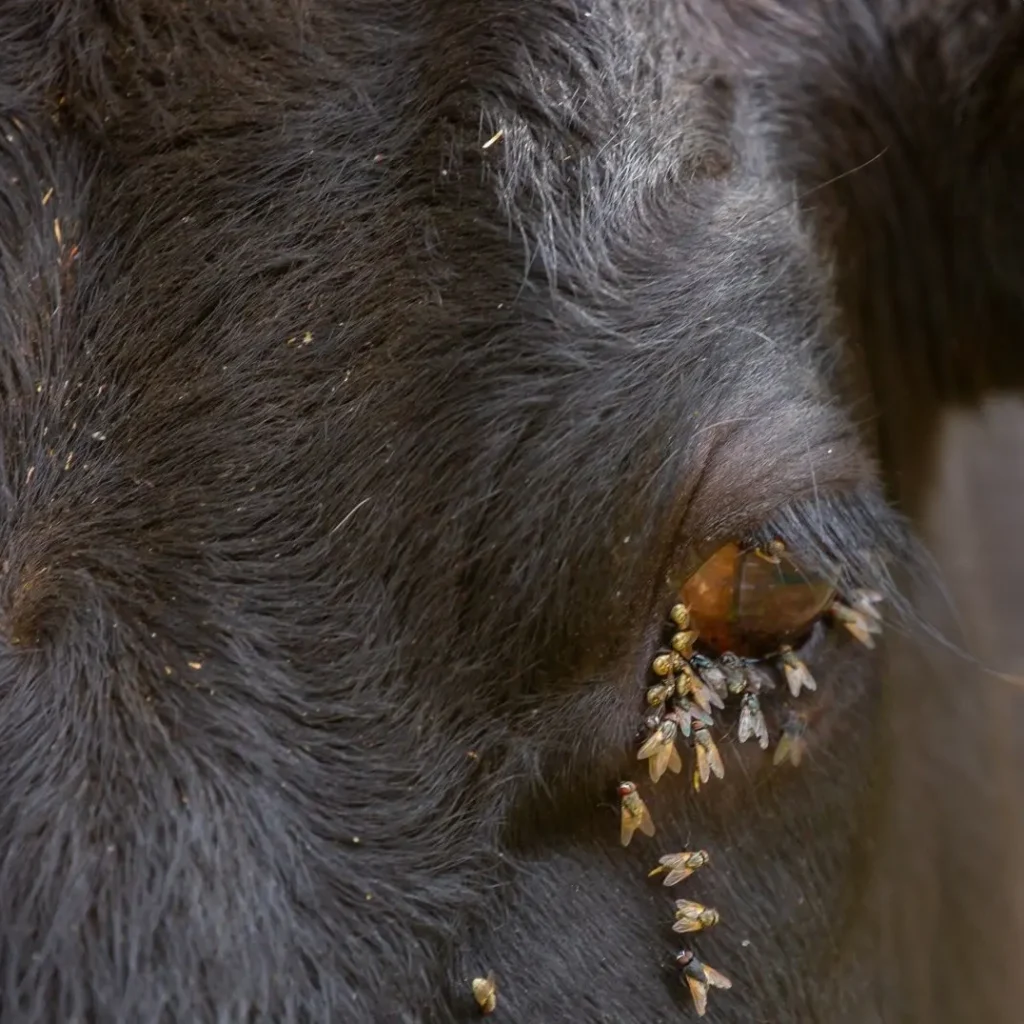
Flies are more than just a summer nuisance—they’re a serious threat to cattle herd health and performance. Whether you’re raising Black Wagyu, Akaushi, or any other cattle, flies can reduce average daily gain, increase disease transmission, and stress your animals. In this month’s health feature, we’re sharing an in-depth guide from American Cattlemen on building an effective fly control protocol that works year-round. Learn about integrated pest management strategies that can help keep your herd healthy and thriving through the warmer months.
—
Winning the War on Flies: Building a Summer Health Protocol
By Jaclyn Krymowski, American Cattlemen
Flies are a ubiquitous annoyance of any type of livestock business. And while their continual presence can easily be enough motivation to mitigate them, there is another reason to get rid of them – they impact herd health and increase stress loads.
Flies cost U.S. producers a whopping 700 million to 1 billion dollars annually according to Ohio State and other land grant university estimates. These losses are in reduced grazing activity, general animal stress and disease transmission within and across herds. Practically, this translates to lowered average daily gain, less milk production for mother cows and reduced tangible market value.
Direct action is the only way to get a handle on this problem by way of a holistic control program tied to your herd health and seasonal chores.
Knowing Your Enemies
Multiple fly species make their home on cattle operations across the U.S. While control methods are similar, subtle differences in your plan of attack can make your effort more meaningful.
Horn Flies
Horn flies are one of the biggest economic external parasites. These flies live on the animals full time and live off of the host’s blood, feeding as much as 20 to 40 times each day. They become economically significant at a capacity of around 200 per head and have been shown to reduce average daily gain.
Face Flies
Face flies are best known for being a prime vector for pinkeye. They feed on animals’ eye and nose secretions and carry disease to the next host.
Stable Flies
The common stable fly spends time on the host’s legs to feed and is typically responsible for continual stomping. These are particularly troublesome pests with a threshold of only five per leg to reduce performance. Cattle stressed by stable flies will bunch together and be more prone to heat stress.
Horse Flies, Deer Flies and Mosquitos
These species generally are of lesser economic significance but all add stress and disease risk.
Integrated Pest Management (IPM)
Because flies are a multifaceted issue, there is no single tool that works. This means that the only way to handle them is with an integrated pest management strategy.
Extension programs consistently emphasize combining multiple approaches.
Sanitation and manure management arguably provide the highest return on investment and are the most overlooked aspects of a fly control program.
Key practices include removing manure and wet organic matter as soon as possible. This includes managing hay waste and other feeding refusal, handling manure storage and containment properly and cleaning winter feeding sites before spring mating. This helps break the flies’ lifecycles before they have time to establish themselves as the weather grows warmer and they take advantage of excess moisture.
Larval control focuses on interrupting the fly lifecycle before adult populations explode. Common tools include insect growth regulators delivered through mineral or feed, along with larvicides applied directly to breeding areas like manure storage sheds. Predatory wasps would also target this segment of cycle. Insect growth regulators and similar products only work with consistency; notably feed additives also require that all animals are consuming them at adequate levels.
A good management tip is timing as these need to be in place before the fly season begins, ideally at least two weeks before. Note that this is especially important in regions on the lookout for New World Screwworm where this type of early stage prevention, along with proper wound care, is the best combatant.
Adult controls should also be part of this program. You should expect to do this to some extent with any integrated pest management, but if you were proactive earlier in the year you can reduce the load.
On-animal treatments include ear tags typically lasting 30 to 60 days, pour-ons, back rubbers and dust bags. There are also spray systems that can be mounted to tractors and ATVs to treat animals. These tools are especially effective for horn flies and external parasites that spend most of their time on the animal.
Walk through traps and premise sprays can be particularly useful for stable flies and other species that spend more time off the animal. Strategic placement is just as important as the product itself. Tools should be located in essentially trafficked areas such as water sources, mineral feeders or gate openings.
Similar to internal parasites and deworming medication, over reliance on a single product or class of insecticide quickly leads to resistance and reduced effectiveness.
Key principles include rotating insecticide classes annually, avoiding underdosing and removing old insecticidal ear tags at the end of the season.
Fly control is a season-long system tied directly to herd health and performance. With a good integrated pest management in place, you can expect to cut back significantly on fly related losses and improved animal health. But remember that this fight is an ongoing one — the operations that see the best results are those that stay consistent, start early and layer multiple strategies together.
—
With a Texas Wagyu Association membership, you receive a complimentary annual subscription to American Cattlemen magazine. Join us today and stay informed on industry best practices.